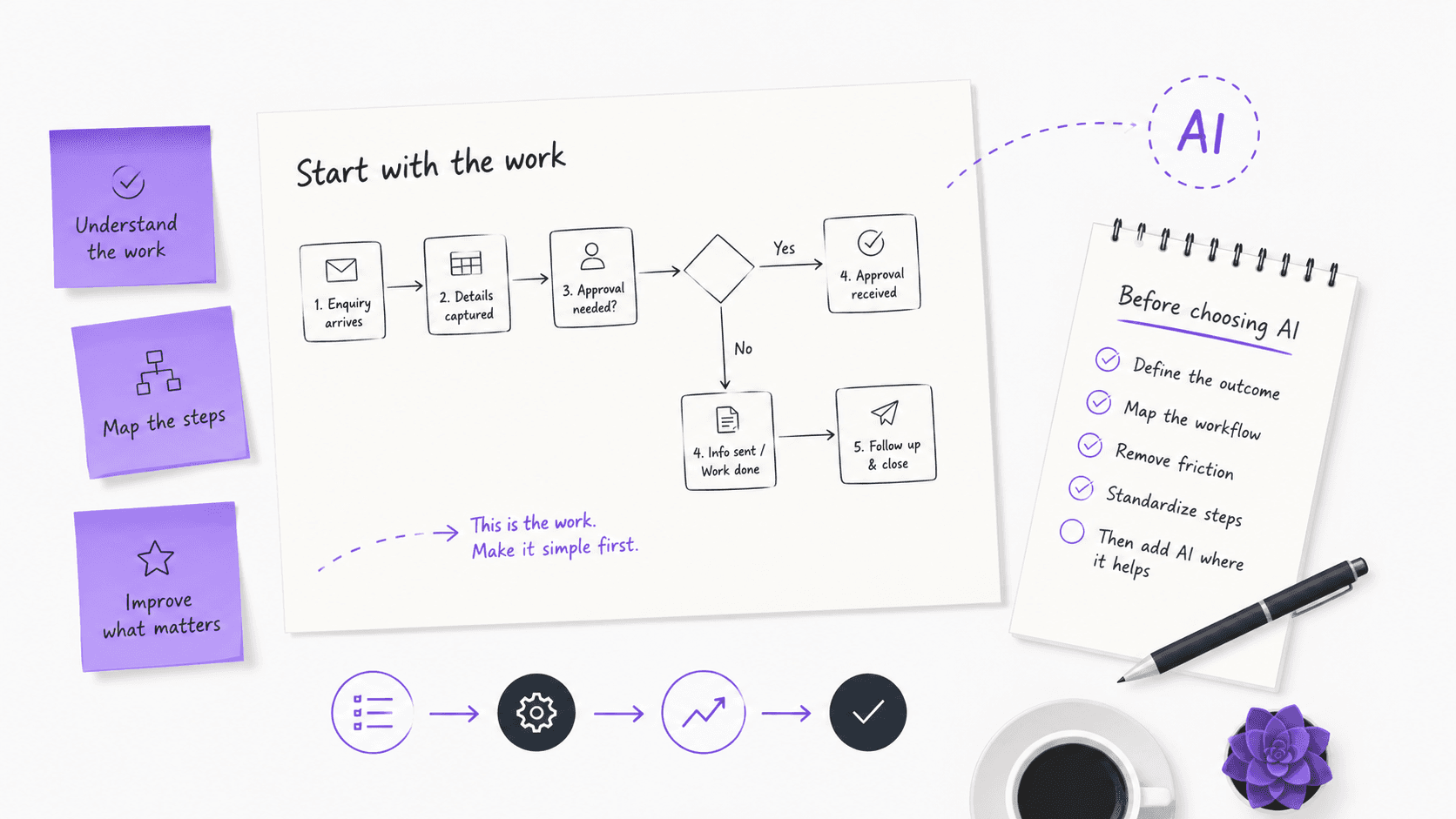
Automation works best when the work is already understood. If a process is unclear, inconsistent or full of exceptions, automating it can make the confusion happen faster.
Before choosing a tool, map one workflow that your team performs often enough for improvement to matter.
Pick a process with a clear beginning and end
Choose work that happens regularly and has an outcome you can recognise. For example: replying to a new enquiry, preparing a recurring report or collecting the information needed before a meeting.
Avoid starting with the most complicated process in the business. A smaller workflow gives you a quicker, safer way to learn what is genuinely worth changing.
Capture the real version of the work
Talk to the people who do the task, not only the people who designed it. Ask them to show where the work really starts, what information they look for, which exceptions occur and where they wait for someone else.
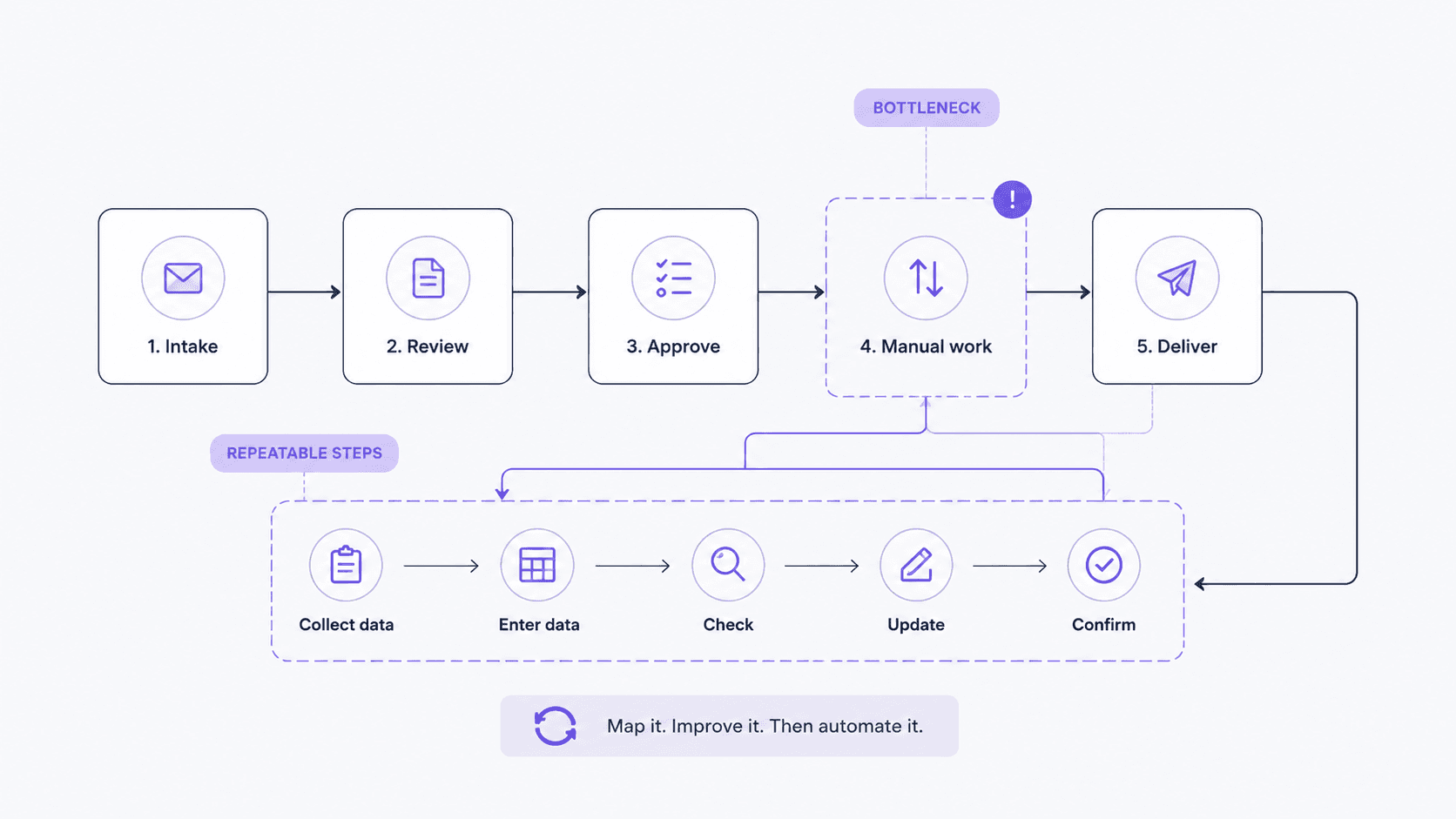
Write the steps in order. Include the tools, folders, inboxes and messages involved. The gaps are often more revealing than the formal process.
Mark the points that need judgement
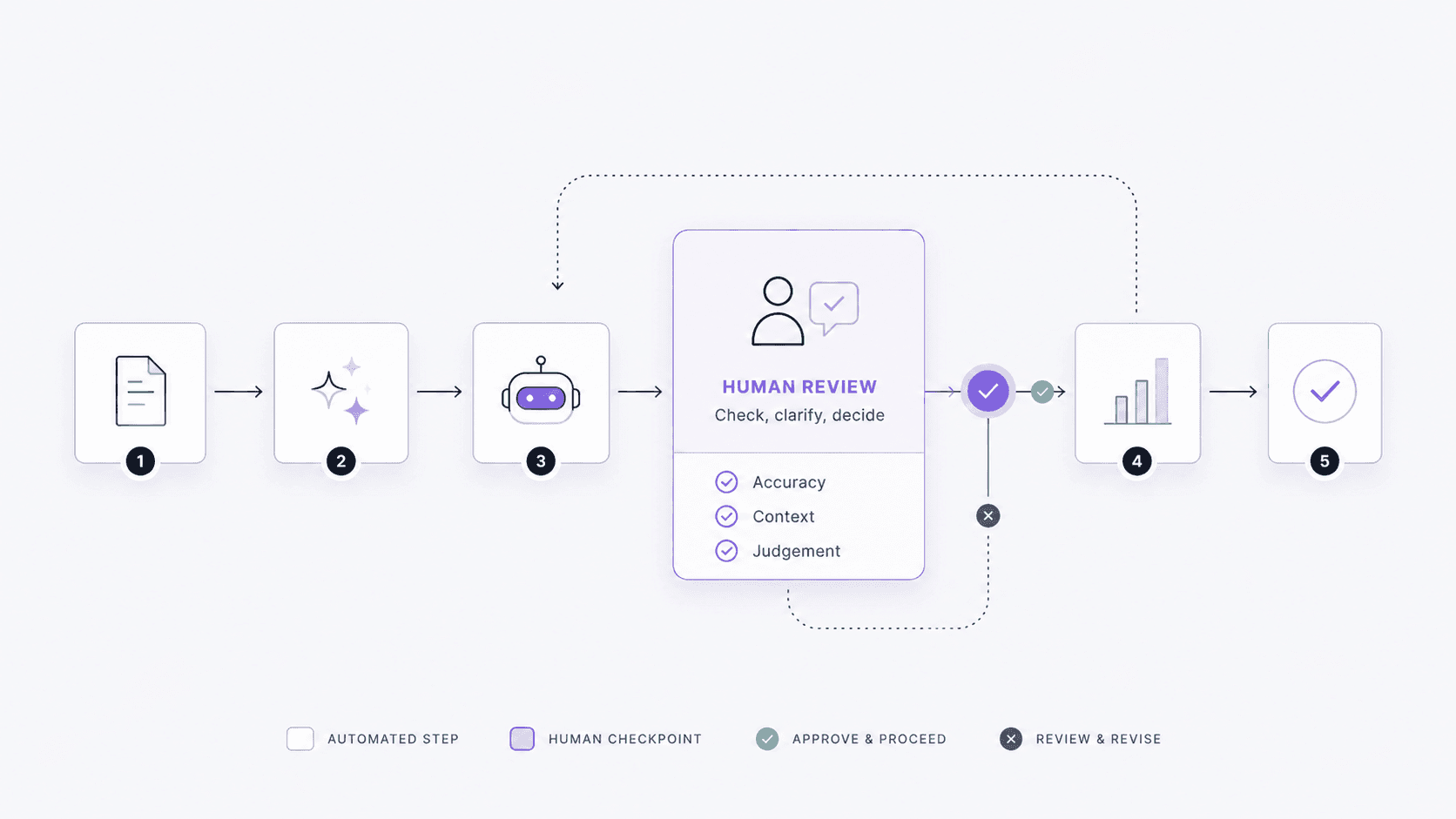
Some steps are repetitive. Others require a person to weigh context, make a decision or communicate with care. Treat those differently.
| Type of step | Practical response |
|---|---|
| Repeated copying or formatting | Consider templates, structured inputs or a lightweight automation. |
| Finding the same information | Improve the source of truth or create a useful knowledge resource. |
| Customer-facing decisions | Keep an accountable person in the review loop. |
| Frequent exceptions | Simplify the policy or process before automating it. |
Decide what to improve first
The right first project is usually the one with a visible problem, a contained scope and a clear owner. It should be possible to test it without disrupting the rest of the business.
Record a starting point: how long the task takes, how often it happens and what tends to go wrong. That gives you something concrete to compare after the change.
Good automation is not about removing people from a process. It is about giving people less routine work to carry and a clearer view of what still needs their attention.