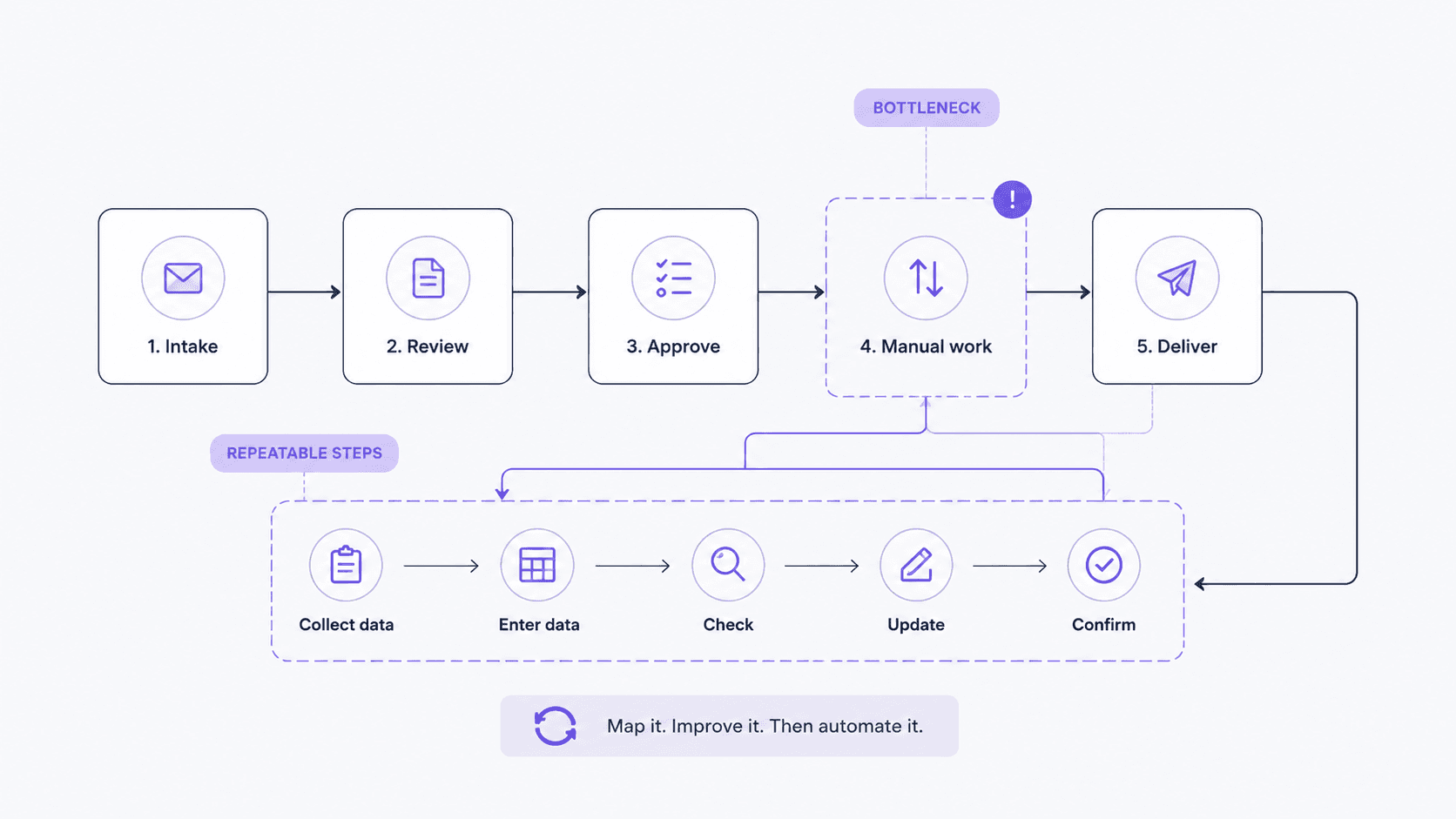
Most small businesses do not need another long list of AI tools. They need a clearer view of the work that keeps repeating, slowing down or falling through the gaps.
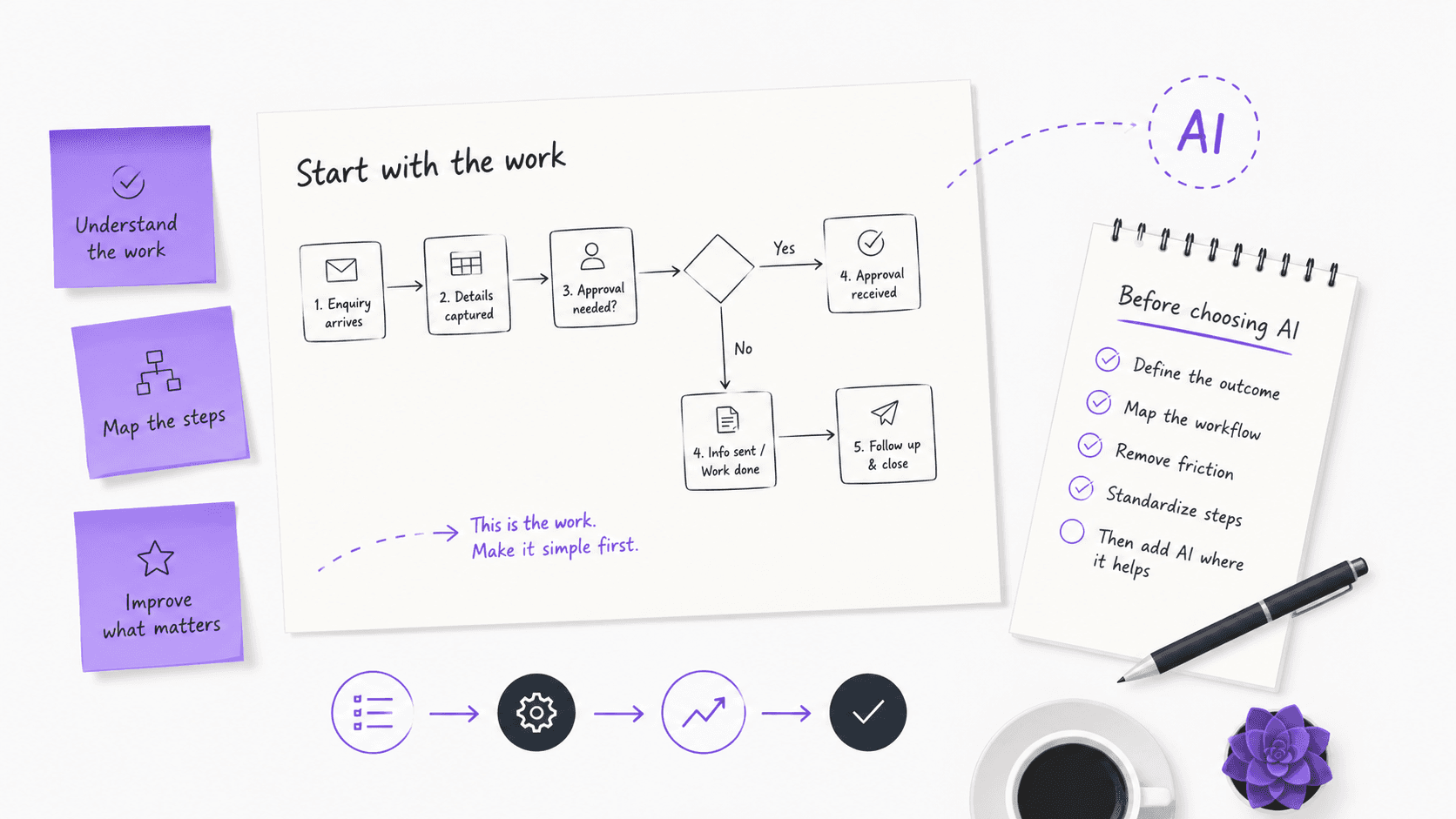
The useful starting point is not “Which tool should we buy?” It is “Where does our team spend time on work that could be made simpler?”
Look for repeated friction
Start by noticing the moments that come up every week:
- copying the same information between systems
- chasing routine follow-ups
- rebuilding reports from scattered information
- answering the same internal questions repeatedly
- relying on one person to remember how a process works
These are not automatically automation projects. They are clues. Some can be improved with a clearer process, better templates or a shared source of information before any new technology is introduced.
Describe the current process plainly
For one recurring task, write down what happens from start to finish. Include who starts it, where information arrives, each handover, the decisions people make and what a good result looks like.
| Question | Why it matters |
|---|---|
| What starts the task? | It shows whether the work has a reliable trigger. |
| Where does information live? | It reveals duplicated searching and copying. |
| Which steps need judgement? | It separates human decisions from routine administration. |
| What happens when it goes wrong? | It helps identify the controls the process needs. |
This is enough to see whether the problem is mainly about process, information, communication or a genuinely repetitive step.
Choose a small, useful test
The first test should be narrow enough to understand. It might be a better way to prepare a weekly update, a more reliable follow-up reminder or a shared answer bank for common questions.
Define what “better” means before you begin. That could be less time spent, fewer missed steps, clearer handovers or more consistent information. A modest test with a visible outcome is more useful than a broad promise to “use AI everywhere.”
Keep people in charge of important decisions
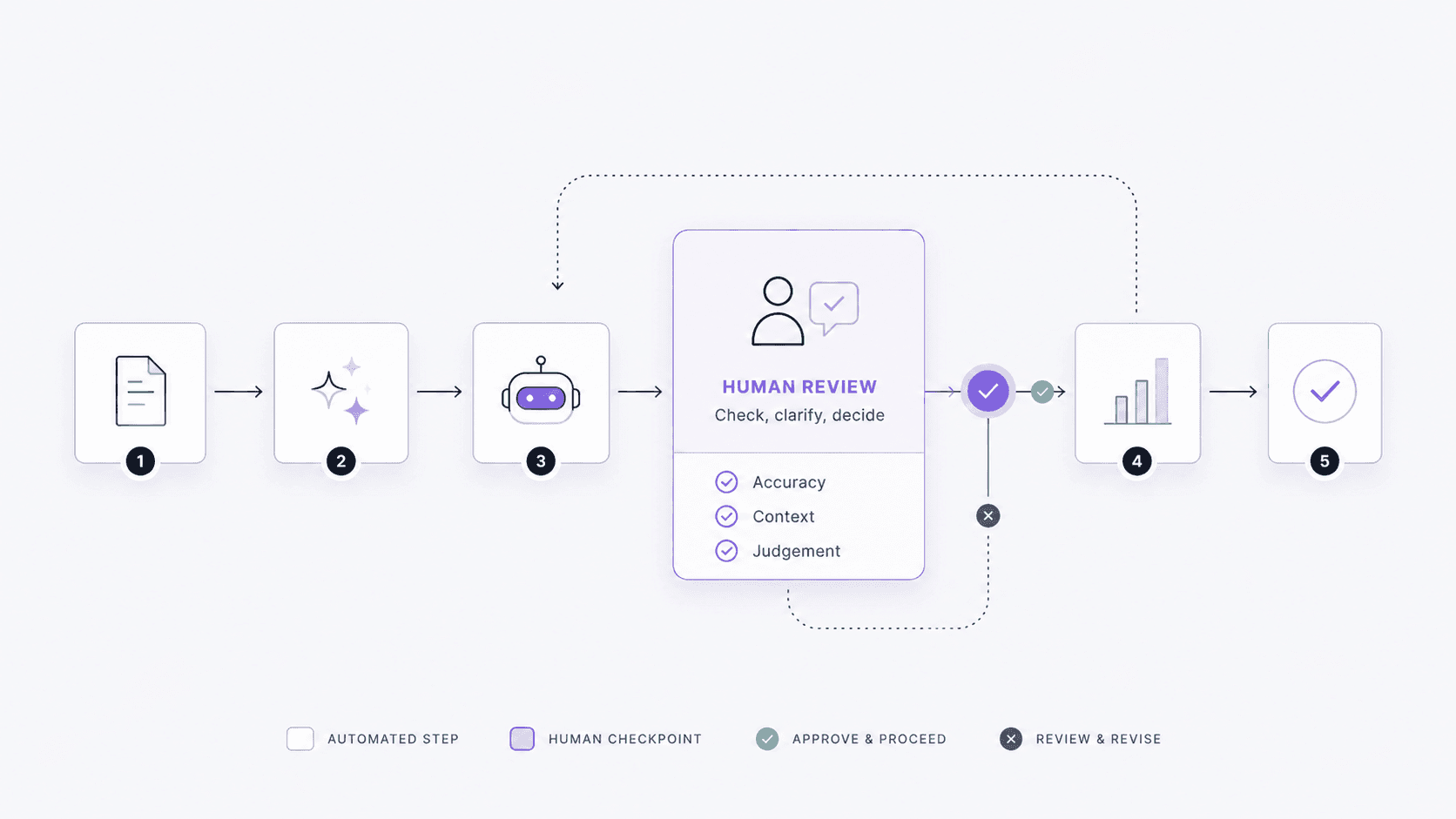
AI can support drafting, organising and finding information. It should not quietly replace the judgement that matters to customers, staff or the business.
When a task affects a person, a commitment, a payment or a sensitive record, decide who checks the outcome and what they need to see before anything is sent or changed.
The aim is not more technology. It is work that is easier to run, easier to check and easier to improve.