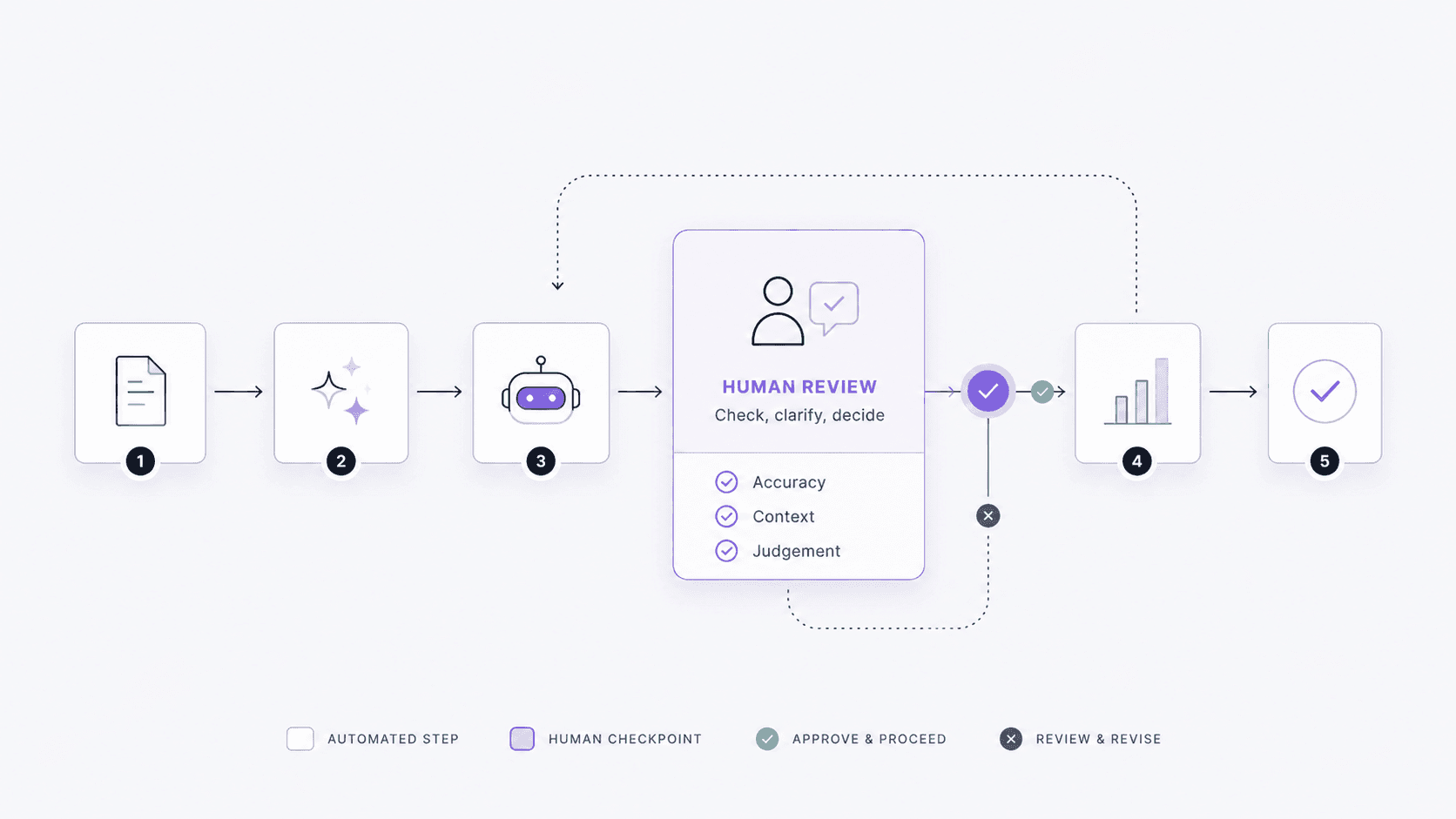
AI can make routine work easier, but it does not remove responsibility. A useful workflow makes clear what the system can prepare, what a person must decide and what should be checked before an outcome is used.
The goal is not to put a person in every step. It is to put human review where the consequences of an error are meaningful.
Start with the consequence, not the technology
Ask what happens if the output is wrong, incomplete or sent to the wrong person. The answer helps determine the level of review that is sensible.
Low-risk work may include drafting an internal outline or organising notes. Higher-risk work can include commitments to a customer, decisions about people, financial information or sensitive records.
Make the reviewer’s job practical
“Human review” is not useful if the reviewer receives a long, unexplained output and has no time to assess it. A good review point gives the person enough context to check the result quickly.
- show the source information used
- make the proposed action clear
- flag uncertainty or missing details
- give the reviewer a simple way to correct, approve or stop the action
Keep an audit trail where it matters
For important workflow steps, it should be possible to understand what happened: what information was used, who approved the outcome and what was ultimately sent or changed.
This does not need to become a complicated compliance project. A clear record in the normal business tools may be enough, depending on the task and the information involved.
Review the workflow after it is live
AI-enabled tools and the work around them change. Review points should be checked after a real period of use: are they catching the right problems, creating unnecessary delay or being skipped because they are not useful?
The best systems make routine work lighter while preserving the human judgement a business needs to operate responsibly.